
The Impact of Australian Immigration Policy on the Education Sector
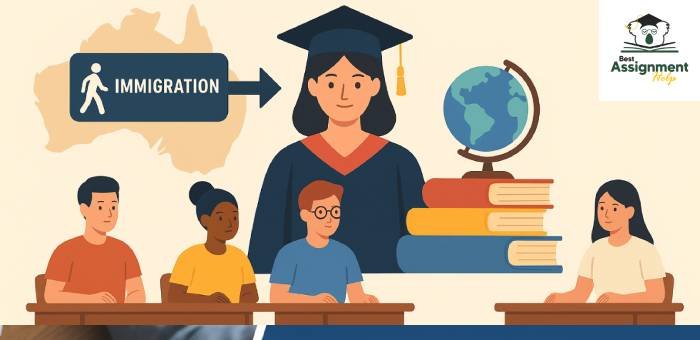
The state of Australia is home to many students from other countries. These students arrive to pursue education in schools, colleges and Universities. Their path is, however, conditional upon immigration policy.
Immigration policy is a governmental set of rules. It decides:
- Who can come to Australia?
- How long can they stay?
- What are their privileges when they are learning?
- When the regulations alter, the students and universities have to adapt.
There are even students who seek write my assignment Australia services so that they can handle their school assignments as they abide by the regulations.
Understanding Australia’s Immigration Policy and Its Influence on Education
In the case of education, this gate determines the number of international students allowed to apply, the programs available to them to pursue, and the duration. An open and student-friendly Australian immigration policy has a direct effect on international student enrollments and guarantees that the universities will be able to plan on how to sustain themselves academically and financially.
- How many students can enter?
- What kind of courses can they join?
- How long can they live in the country?
How It Affects Universities
- Admission depends on visas. If visas are harder to get, fewer students enrol.
- To assist overseas students, instructors sometimes need to modify their lessons.
- Universities hire staff to check if students follow visa rules.
- Students may need help from assignment help for uni students to keep up with their studies.
How It Affects Students
- Filling out visa forms can be confusing.
- Learning new teaching styles is difficult at first.
- Work rules (like only working part-time) make life stressful.
Immigration policy is not, then, pure paperwork. It transforms the way students live, study and achieve success in Australia.
International Student Enrolments: Trends and Effects
There are many overseas students enrolled at Australian universities. But their change in number varies with the change in immigration rules. The variability of international student numbers usually demonstrates the transparency and adaptability of the Australian immigration policy.
Colleges monitor these trends with an aim of modifying courses, labour, and campus resources. Consistency of growth is achieved through a stable policy environment, and long-term planning is disrupted by sudden changes.
Current Trends
- More students are coming from India, China, and Southeast Asia.
- Fewer are coming from Europe after the pandemic.
- Because they are more flexible, many students progressively favour hybrid or online courses.
Effects of These Changes
- Students feel more pressure to study hard.
- Universities offer extra help like counselling and language workshops.
- Some students use assignment help Australia services to handle heavy workloads.
Why Numbers Matter
When student numbers rise or fall, it changes:
- Class sizes.
- How many teachers are hired?
- Scholarships and financial aid.
- Support services like tutorials and English help.
Visa Reforms: Navigating Changes in Student Visa Regulations
Visas are like tickets. Students are not allowed to study in Australia without a visa. They are subject to new visa regulations that usually simplify or complicate their lives. Effective and properly organised rules regarding student visas enable universities to have consistent international student enrollments.
The predictability of the policies will allow schools to better predict the demand, allocate future resources, and successfully attract and retain programs to international students.
Key Changes in Student Visas
- More documents are needed now.
- Students can work fewer hours in part-time jobs.
- Some post-study visas are shorter.
How Students Adjust
- They plan their time carefully.
- They get advice from teachers and mentors.
- They choose study paths that match their visa limits.
Common Challenges
- Stress from frequent rule changes.
- Confusion about how much they can work or study.
- I need extra assignment help to meet deadlines.
How Universities Help
- Running workshops about the new visa rules.
- Giving one-on-one advice.
- Offering flexible online classes.
Challenges Faced by Universities Under Immigration Rule
The impact of changes in immigration policies is also a big problem for Universities. The changing rules may have an impact on international student enrollments, which complicates the planning of budgets and resources in the institutions.
Unpredictable changes in policies can affect courses available, accommodation, and other support provision as well, and universities need to ensure they adapt promptly to ensure quality education and satisfaction among students.
Main Problems
- More paperwork: Universities must keep track of every student’s visa.
- Money issues: Heavy reliance on the economic contributions of international students means universities lose money if fewer students come. This also affects research and teacher jobs.
- Teaching stress: Too many students can make it hard for teachers to give enough attention to each one.
In response, universities establish new support networks, enhance online education, and prepare employees to deal with immigration transformations.
Financial Contributions of International Students
International students contribute more than simply their expertise. They are also accompanied by money and ideas. They provide direct assistance to local economies through tuition fees, living costs, and travel and create an extra financial strength to universities.
Effective and supportive student visa regulations have ensured that Australia remains a destination for competent students who maintain the education and growth of the economy.
Key Economic Contributions
- Tuition fees: Pay for teachers, staff, and research.
- Living costs: Rent, food, and transport support local businesses.
- Culture: Students share their traditions, making classrooms more global.
Student Struggles With Money
- Tuition fees are very high.
- Working hours are limited, so they earn less.
- Financial stress sometimes affects study quality.
University Support
- Scholarships and grants.
- Money management workshops.
- Assignment help Australia services to reduce workload.
Social and Cultural Effects: The Role of Immigration in Diversifying Australian Education
Students everywhere in the world can bring them to campuses and make them lively and diverse. This is possible due to the inclusion of students from various regions to be able to study in Australia under student visa regulations.
Consequently, universities gain access to cultural exchange and international friendship, combined with new insights, which bring flavour to classroom discussions.
Benefits
- Students learn new ways of thinking.
- Friendships across cultures grow.
- Students are better prepared for global jobs.
Challenges
- Language barriers can make learning difficult.
- Cultural differences sometimes cause misunderstandings.
- Some students feel shy or left out.
Solutions
- Peer mentoring programs.
- Language and study groups.
- Guidance on the Australian education style.
Policy Critiques and Debates: Balancing Immigration and Educational Integrity
There is a lot of debate on immigration policy. Some individuals prefer tighter regulations, and there are those who prefer less restrictive policies. To further this point, the economic contributions of international students should also be noted, which, in most cases, surpass the challenges.
Criticisms
- Too many students may put pressure on classrooms.
- Very strict rules stop talented students from coming.
- Complex policies create stress.
University Actions
- More student services.
- Online tools for flexible study.
- Encouragement to use professional assignment help for support.
Anticipating Changes and Their Potential Impact on Education
The immigration policy of the future will determine the growth of the education sector in Australia. Any changes will have a direct impact on the economic services of international students, which contribute towards national development.
In the same way, the social and cultural effects of immigration will define the extent to which university communities will be vibrant and connected in the years to come.
What We May See Ahead
- Stricter visa checks and rules.
- More online and hybrid classes.
- Clearer pathways to permanent residency for skilled graduates.
Impact on Students
- More will choose online study before moving to Australia.
- Students may compare Australia with other countries like Canada or the UK.
Opportunities for Universities
- Build better online learning systems.
- Work with industries to give students jobs after their studies.
- Stay flexible to adapt to new policies.
FAQs
- How does immigration policy affect student enrollments?
When the regulations are rigid, fewer students can visit without any difficulties. When the rules are approachable, more students will submit applications in a confident and consistent manner.
- What role do visas play in education?
Visas determine whether a student will be able to remain, work, and study in Australia in a successful way and follow valuable academic and professional opportunities.
- Why are international students important?
They introduce new cultures, pay tuition fees and contribute to the prosperity of the economy, as well as enriching the communities with varied thinking and experiences.
- How much do overseas students contribute to the economy?
They spend billions of dollars on charges, rent, food, and travelling overseas. This finances universities, small businesses, and generates a lot of stable employment.
- How do policies shape culture in universities?
With good policies, campuses become more diverse, and students are exposed to more ideas, experiences, and views, which ensures lively learning environments for all students.
Conclusion
The policy and education in Australia are connected with immigration. Rules influence student numbers, visas, money and culture. To cope with new policies and still manage their studies, students usually seek assignment help in Australia.
Universities, in their turn, aim at assisting them by using workshops, counselling, and flexible learning possibilities. Changes will continue to be experienced in the future. However, with students and universities remaining ready, Australia will remain among the most viable countries in terms of education.